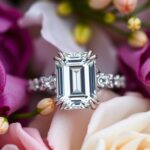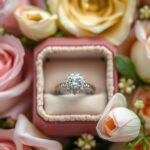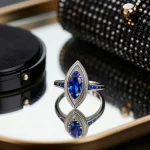
You’ve narrowed it down to two dreamy shapes: marquise and teardrop (aka pear). Great taste. Both bring drama, length, and sparkle. But which one fits your vibe, your hand, and your lifestyle? Let’s compare the cuts, the look, and all the little details that matter when you’re picking a forever ring.
Meet the Shapes: What You’re Actually Choosing
This image was AI-generated or AI-enhanced.
Marquise and teardrop stones both stretch the finger and bring serious presence. But they do it differently.
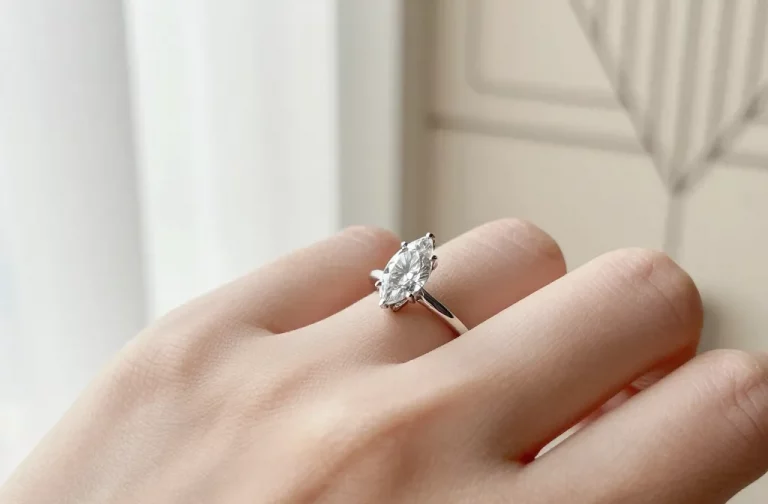
Marquise (aka navette)
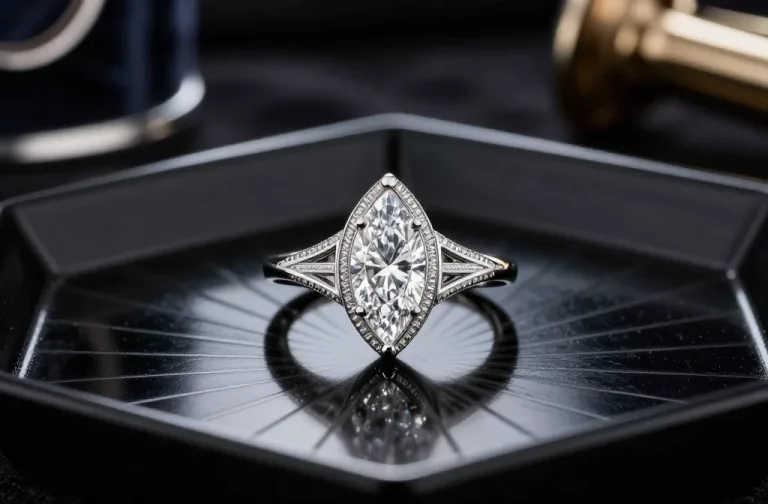
Think football-shaped with two sharp points. A marquise looks bold, vintage, and a little extra in the best way. It maximizes face-up size, so you get a bigger-looking stone for the carat.
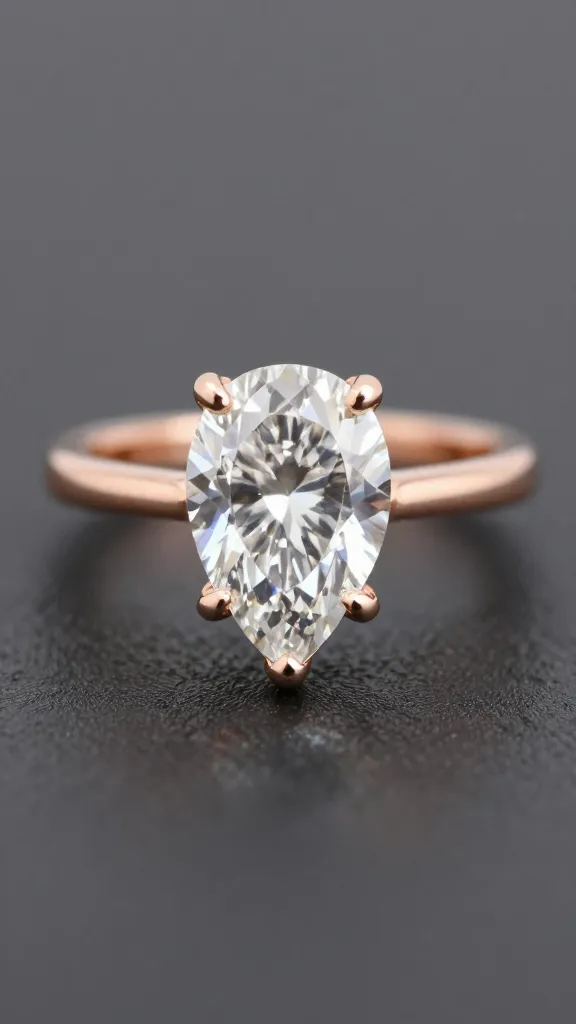
Teardrop (aka pear)
Half round, half point. It blends the softness of a round cut with the drama of a marquise tip. It’s elegant, flirty, and super flattering—especially when you point the tip toward the fingertip.
Style Vibes: What Each Cut Says Without Saying It
This image was AI-generated or AI-enhanced.
– Marquise: Regal, retro, unapologetically glam. If you love French-girl vintage and a touch of drama, the marquise whispers your name.
– Teardrop: Romantic, modern, versatile. It works from minimal to ornate and plays well with stacks and halos.
FYI, both shapes elongate the finger. The marquise reads edgier. The teardrop reads softer. Neither is “better,” but one will feel more you.
Sparkle, Fire, and That Bow-Tie Thing
This image was AI-generated or AI-enhanced.
Every elongated cut risks a “bow-tie”—a darker band across the center from how light passes through. You can’t totally avoid it, but you can manage it.
Marquise Sparkle
– Brilliant faceting = tons of sparkle.
– Can show a noticeable bow-tie if the cut quality slips.
– Often looks larger per carat because of length-to-width ratios around 1.8–2.2.
Pear Sparkle
– Also brilliant-cut, with great scintillation.
– Bow-tie can appear, but well-cut pears keep it mild.
– Looks a touch smaller than marquise at the same carat, but still generous.
Hot tip: Always judge sparkle with your eyes, not the certificate alone. Move the stone under different lights. If the bow-tie pulls your eyes every time, hard pass.
Comfort, Durability, and Daily Life
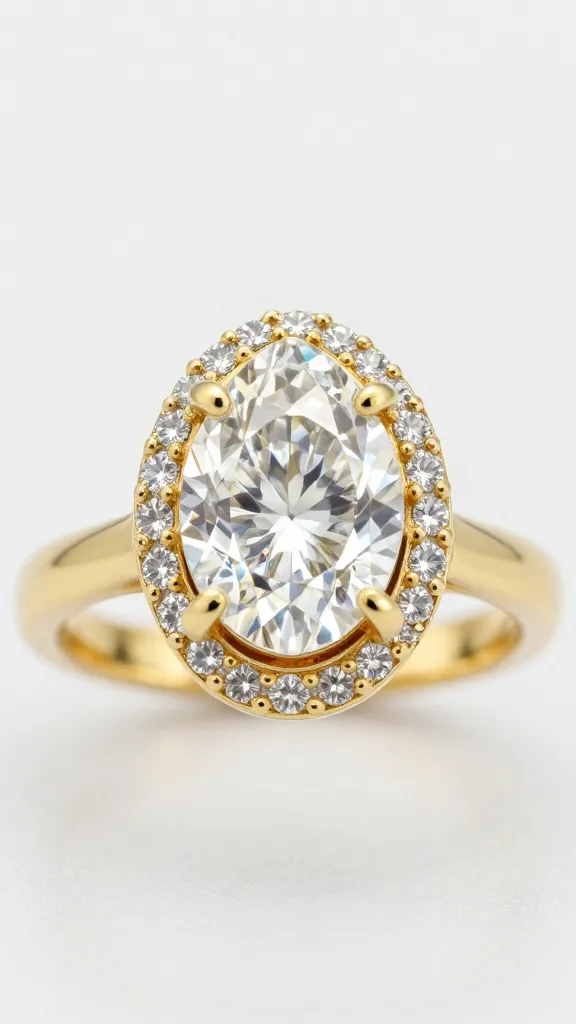
This image was AI-generated or AI-enhanced.
Let’s talk reality. You’ll wear this every day, through door handles, sweaters, and mysteriously aggressive tote bags.
– Both shapes have points that need protection.
– Marquise has two tips, so it needs double the guarding.
– Pear has one tip, so slightly less risk, but still protect it.
Settings That Keep Your Stone Safe
– V-prongs at the tips: non-negotiable for both shapes.
– Bezel or semi-bezel: sleek, modern, and about as safe as it gets.
– Halo: adds sparkle and cushions the edges.
– Low-set solitaire: fewer snags, more comfort.
IMO, if you’re hard on your jewelry, a pear in a bezel or halo is the sweet spot for daily durability and sparkle.
How They Look on Different Hands
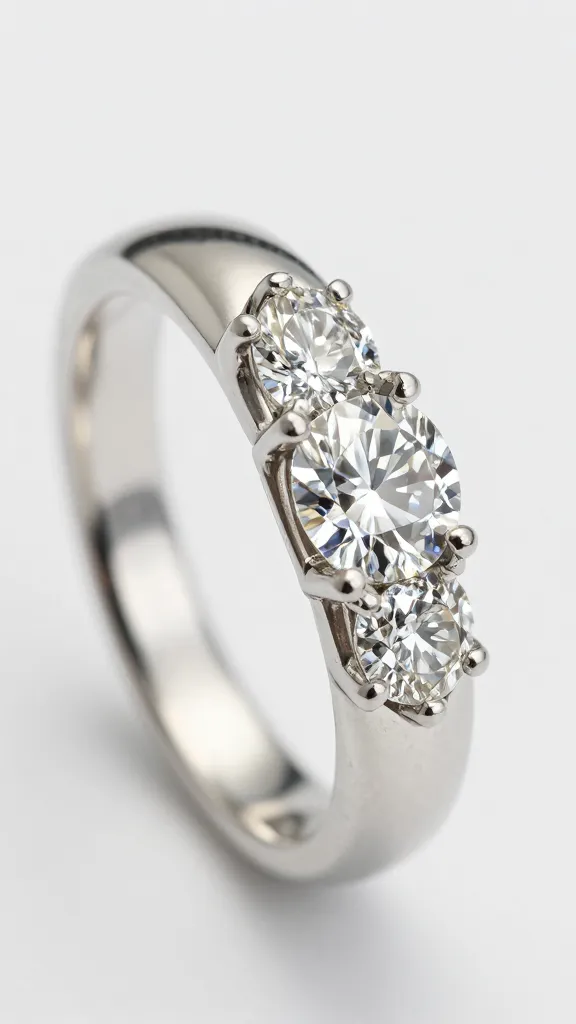
This image was AI-generated or AI-enhanced.
You don’t need a stylist—just try stuff on. But here’s a cheat sheet.
– Shorter fingers: Both elongate, but pears look especially slimming when you point the tip out.
– Wider fingers: Marquise spans the finger and gives major presence.
– Long slender fingers: Either works. Marquise leans dramatic; pear leans elegant.
Orientation Matters
– Pear pointing out (toward the fingertip): Classic and lengthening.
– Pear pointing in (toward the hand): Very fashion, slightly niche.
– Marquise east-west: Trendy, modern, and chic—great for stacking.
– Marquise north-south: Traditional and finger-elongating.
The Cut Quality Checklist (So You Don’t Get Catfished)
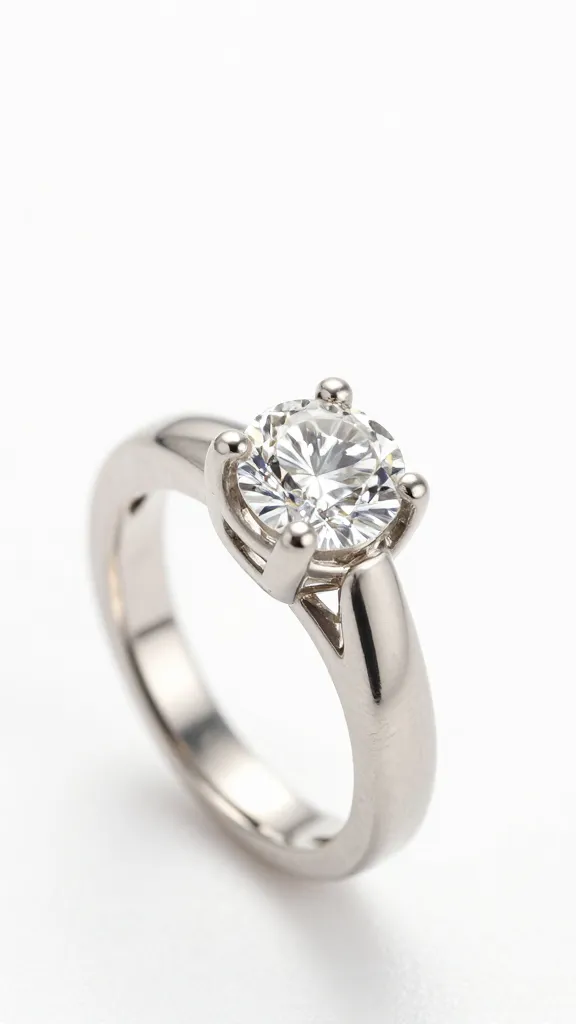
This image was AI-generated or AI-enhanced.
Numbers don’t tell the whole story, but they help. Here’s a quick, buyer-friendly guide.
For Marquise
– Length-to-width: 1.8–2.1 looks balanced.
– Symmetry: Ends should mirror each other. Lopsided = no.
– Girdle: Medium to slightly thick near tips (prevents chipping).
– Bow-tie: Accept a faint one only.
For Pear
– Length-to-width: 1.45–1.65 is the sweet spot for most hands.
– Symmetry: The curve should be even; no flat sides or bulges.
– Point alignment: The tip should align with the center of the rounded end.
– Bow-tie: Slight is fine; avoid heavy shadows.
Pro move: Ask for videos under diffused and spot lighting. Rotate the stone. Does it light up everywhere or die in the middle?
Color, Clarity, and Budget: Where to Spend
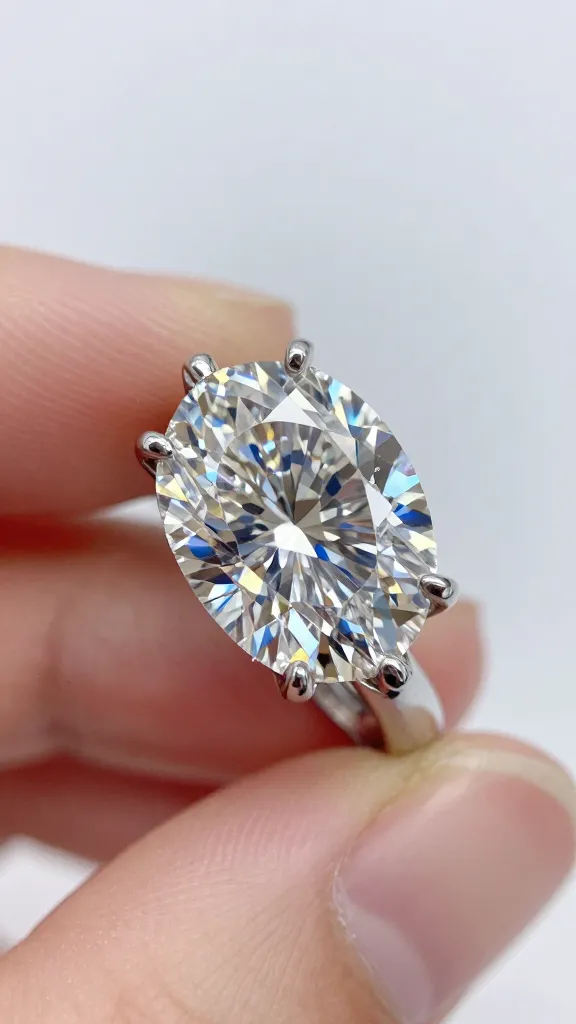
This image was AI-generated or AI-enhanced.
These shapes can show flaws and tint more than a round, so you want to place your bets smartly.
– Clarity: Go “eye-clean.” VS2–SI1 often nails value. Watch for inclusions near tips—they’re stress points.
– Color: G–H looks bright in white gold/platinum. Warm metals (yellow/rose) let you dip to I–J without blinking.
– Carat vs Cut: Don’t chase size at the expense of a dead center. A lively 1.2 ct beats a dull 1.5 ct every time.
Budget hack: A halo boosts presence for both shapes without paying for a larger center stone.
Design Pairings That Slap (Aesthetic-wise)
This image was AI-generated or AI-enhanced.
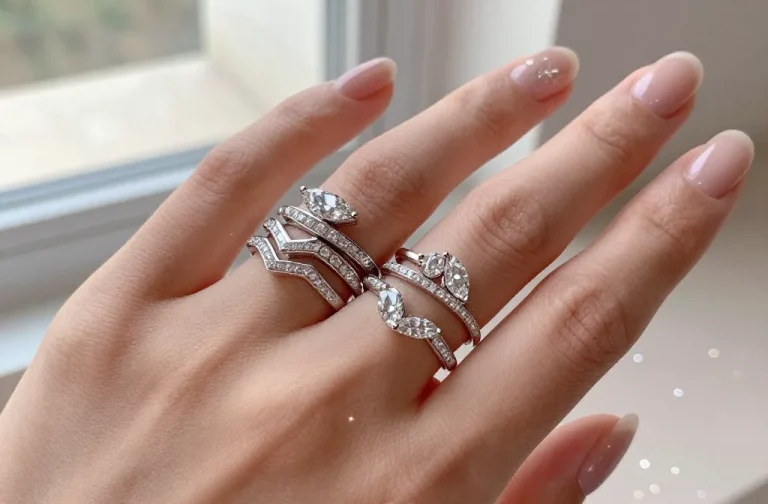
– Marquise + Tapered baguettes: Old Hollywood energy.
– Marquise + East-west bezel: Modern, minimal, insanely cool.
– Pear + Hidden halo: Soft sparkle with a sleek profile.
– Pear + Side pears: Romantic symmetry.
– Either + Solitaire knife-edge band: Clean lines, max impact.
Wedding Band Compatibility
– Pear: Plays well with curved or contour bands; straight bands can leave a gap (which can look intentional and chic).
– Marquise: Similar story. Consider a nesting band or a gentle curve for a flush fit.
So… Which One Should You Choose?
– Choose Marquise if you want bold, vintage drama, a larger face-up look, and you don’t mind babying two tips.
– Choose Pear if you want romantic elegance, easier wearability, and tons of setting flexibility.
IMO: If you love editorial, go marquise. If you love timeless with a twist, go pear. But honestly? You can’t lose here.
FAQs
Which shape looks bigger: marquise or pear?
A marquise usually looks larger because of its elongated outline and two pointed ends. It spreads the carat weight across more finger real estate. Pears still look generous, just a hair less expansive at the same weight.
Does either shape snag more on clothing?
Both can snag if you set them high and leave the tips exposed. Use V-prongs, consider a bezel or halo, and set the stone lower. That combo seriously reduces snags, FYI.
What’s the best metal for these shapes?
White metals (platinum/white gold) dial up the icy look and hide color a bit. Yellow and rose gold add warmth and can make slightly lower color grades look intentional and glowy. Go with what matches your vibe and skin tone.
How do I keep the tip from chipping?
Prioritize a secure setting: V-prongs or a bezel around the point, with a slightly thicker girdle near the tip. Take it off for the gym, yard work, and aggressive cleaning sessions. Routine checks with a jeweler help too.
Should I worry about the bow-tie effect?
A little bow-tie is normal for both shapes. You only need to worry if it creates a dark, obvious stripe that steals attention. View the stone in multiple lighting conditions and trust your eyes.
Which orientation looks best for a pear?
Most people prefer the tip pointing toward the fingertip because it elongates beautifully and feels classic. If you like something unexpected, point it inward or set it east-west and own the moment.
Conclusion
Marquise brings high-drama vintage flair. Teardrop brings soft, modern romance. Both flatter the hand, both sparkle like crazy, and both deserve their moment. Try them on, move your hand in the light, and notice which one makes you grin without thinking. That’s your ring. IMO, your gut knows before your brain does—listen to it.
This image was AI-generated or AI-enhanced.