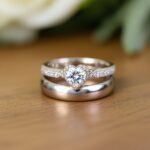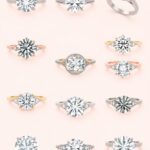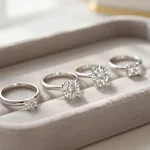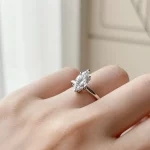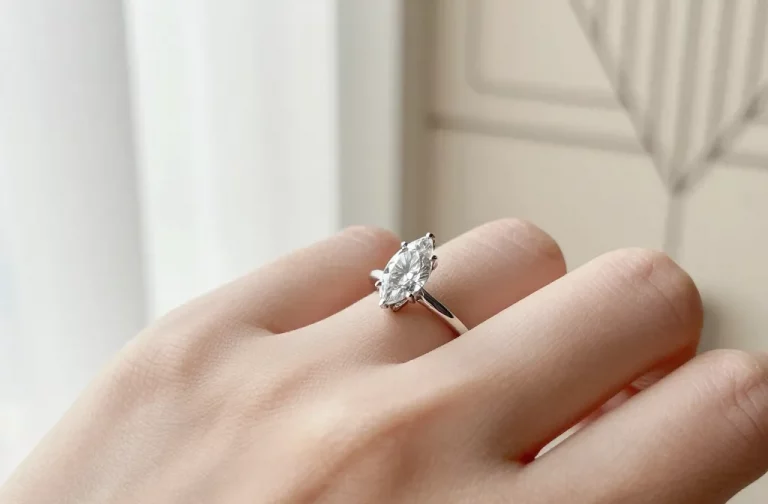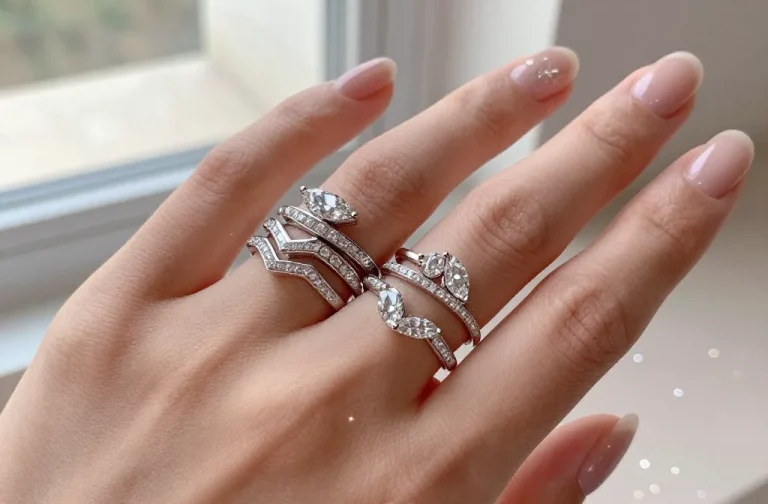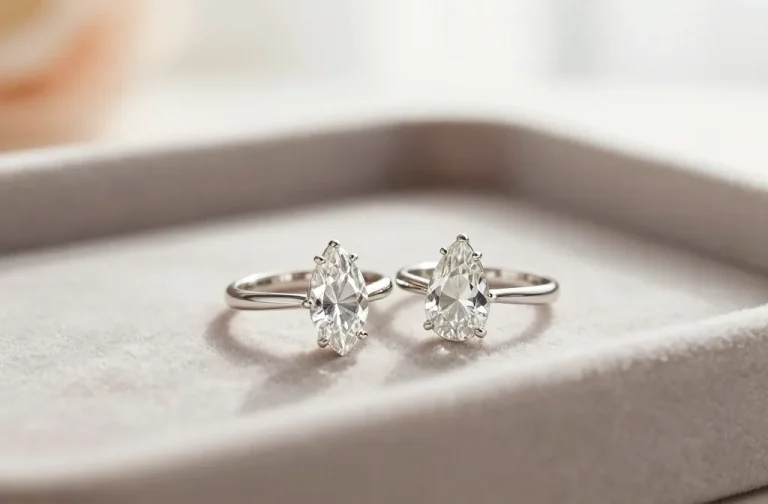
If you crave a ring that looks like it strolled straight out of a jazz club and onto your finger, a vintage marquise wedding ring checks all the boxes. Think bold geometry, glimmering symmetry, and a little “I just stepped off a 1920s film set” energy. The marquise shape already elongates and dramatizes, but pair it with Art Deco details and—chef’s kiss—you get a statement that whispers elegance and screams style (in a tasteful indoor voice).
Why the Marquise Cut Feels So Art Deco
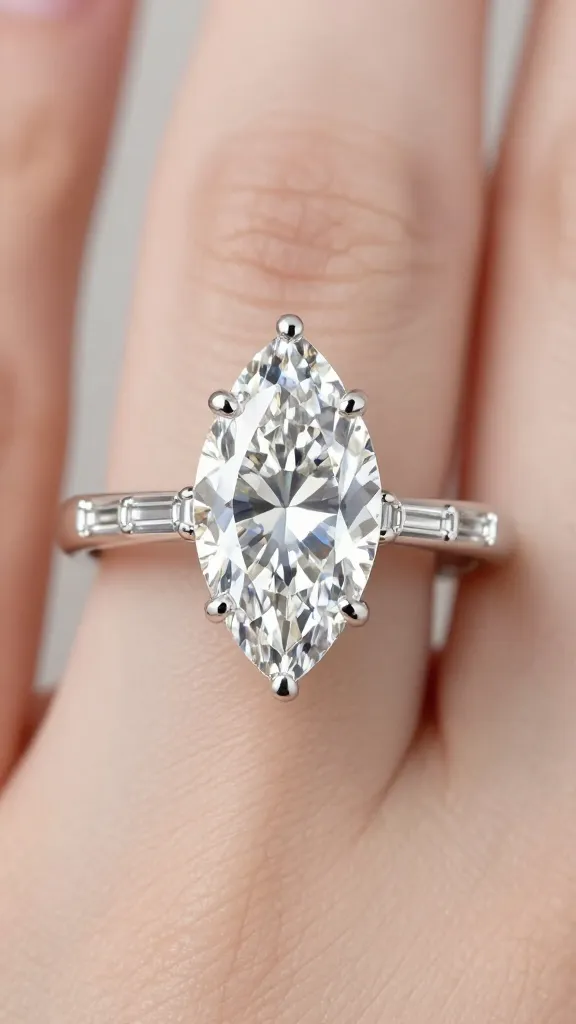
The marquise cut has drama baked in. That long, tapered silhouette elongates the finger and throws light like it has places to be. In the 1920s, designers loved clean lines and sleek shapes—so the marquise fit right into the geometry-obsessed era.
What gives it that Deco vibe?
- Symmetry first: Art Deco loved balance. The marquise cut is perfectly mirrored end to end.
- Sharp points, bold presence: It pairs beautifully with stepped settings and angular metalwork.
- Contrasts that pop: White metals next to bright stones? Yes please.
Signature 1920s Details to Look For
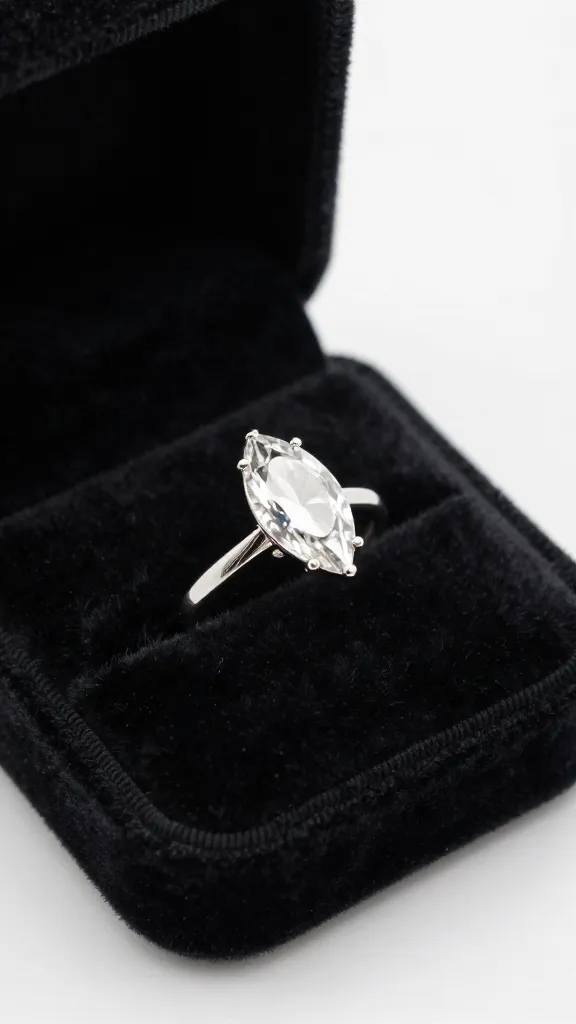
You’ll spot a true Art Deco-inspired ring a mile away. Here’s what to hunt for when you’re browsing:
- Milgrain edges: Tiny beaded borders that add texture and a handcrafted touch.
- Filigree and openwork: Lacy metal patterns that feel airy but intricate.
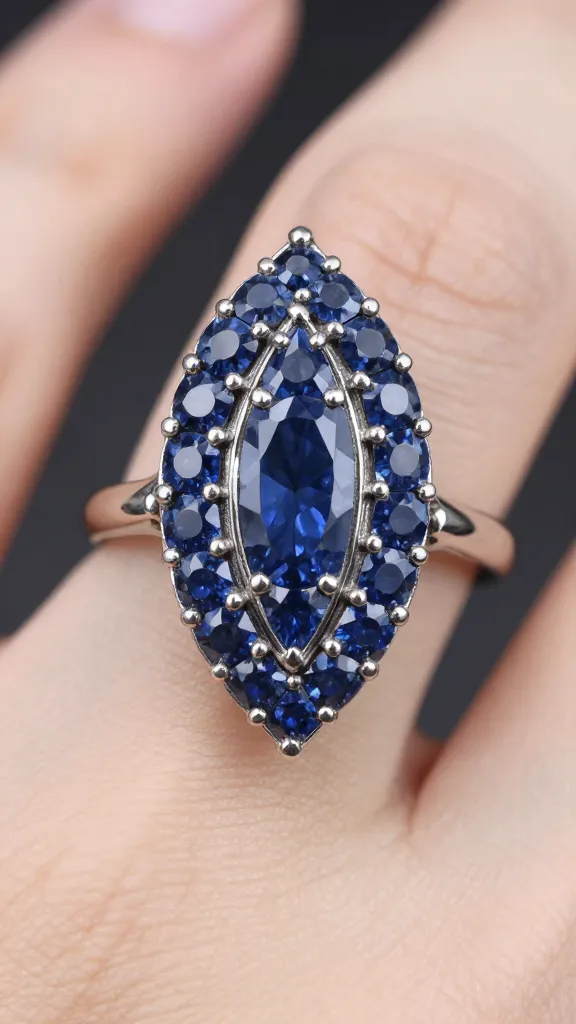
- Geometric halos: Octagons, hexagons, and navette frames around the marquise center stone.
- Contrasting stones: Onyx, sapphires, emeralds, or calibre-cut accents amplifying the center diamond.
- Step settings: Tiered shoulders and architectural gallery details that scream “Gatsby did it first.”
Metal Choices That Nail the Look
- Platinum: The 1920s favorite—strong, bright, and ideal for delicate filigree.
- White gold: A budget-friendlier twin to platinum with the same cool tone.
- Yellow or rose gold: Not typical for Deco, but mixing them with white metal accents can look amazing, IMO.
Center Stones: Diamonds, Sapphires, and Beyond
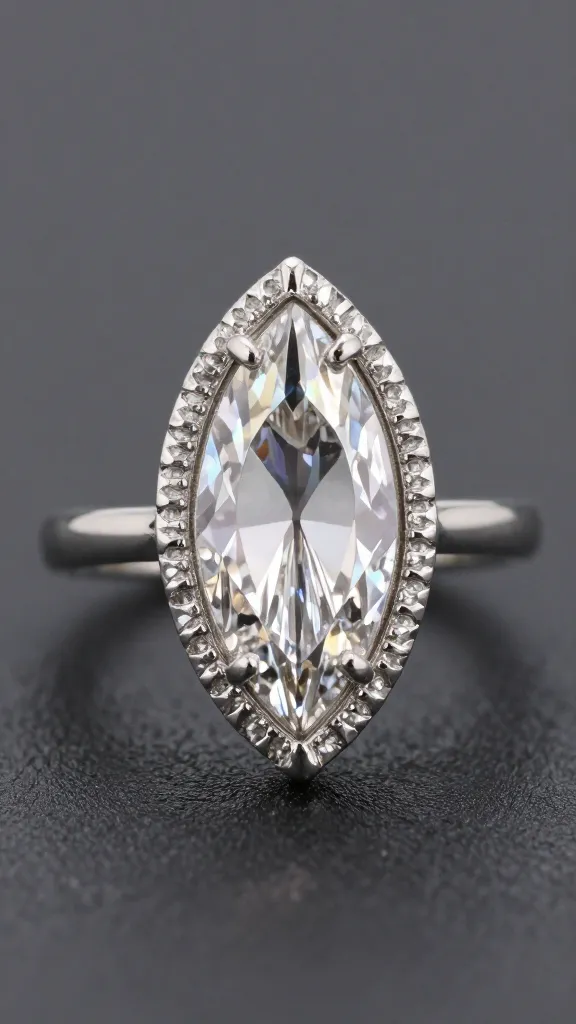
The marquise center stone doesn’t have to be a diamond (though it often is). Deco designers adored contrast, so you’ll see colorful side stones hugging a white diamond or vice versa.
Best picks for that period vibe:
- Old European or transitional cut diamonds: If you want authentic vintage sparkle with chunkier facets.
- Marquise brilliant diamonds: Modern cut, classic shape—tons of fire and finger coverage.
- Sapphires and onyx: Deep blue or inky black accents create that dramatic, graphic look.
- Emeralds: A vibrant green punch that pairs beautifully with platinum settings.
A Note on the “Bow-Tie” Effect
Marquise diamonds can show a dark bow-tie-shaped shadow. It’s normal, but you want it subtle, not front-row-center. FYI: good cut quality helps reduce it, so work with a jeweler who understands marquise faceting.
Design Ideas You’ll Love (and Actually Wear)
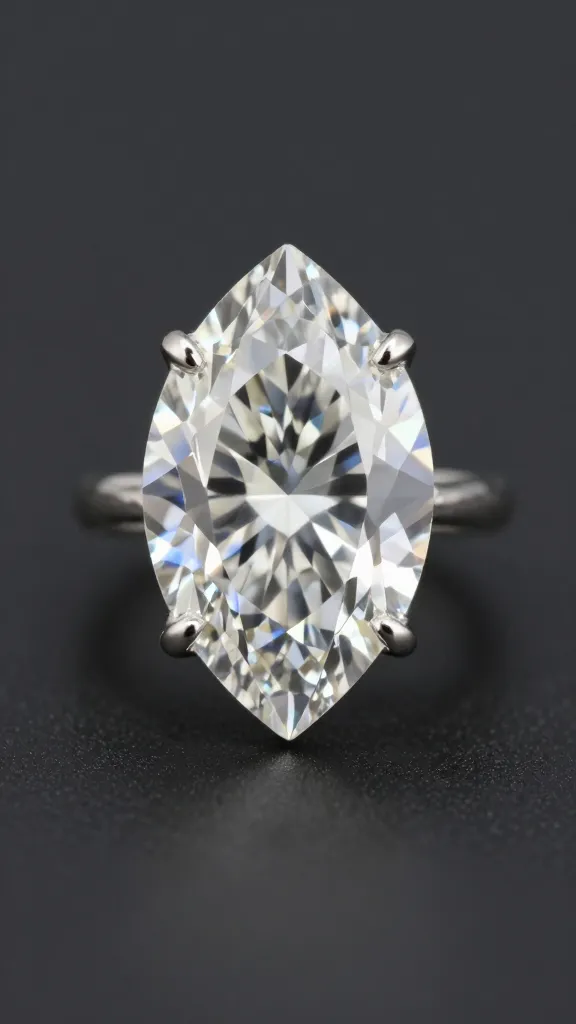
Let’s talk style combos that hit that sweet spot between “vintage-inspired” and “I could wear this every day without fear.”
- East–West marquise: Set horizontally for a fresh twist on Deco geometry. It looks modern but still vintage-cool.
- Double halo with calibre-cut accents: Add a slim halo of French-cut sapphires plus a diamond frame. Sounds extra—because it is, and it’s stunning.
- Engraved shoulders + milgrain: Subtle detailing that looks hand-touched and heirloom-y.
- Split shank with open galleries: Creates airy architecture around the center stone. More light, more sparkle.
Low vs. High Profile Settings
– Low profile: Sits closer to the finger. Comfy, secure, great for everyday wear.
– Higher profile: Shows off the gallery and lets in more light for extra sparkle. Just watch for sweater snags—ask me how I know.
Buying Vintage vs. Custom: Pros and Cons
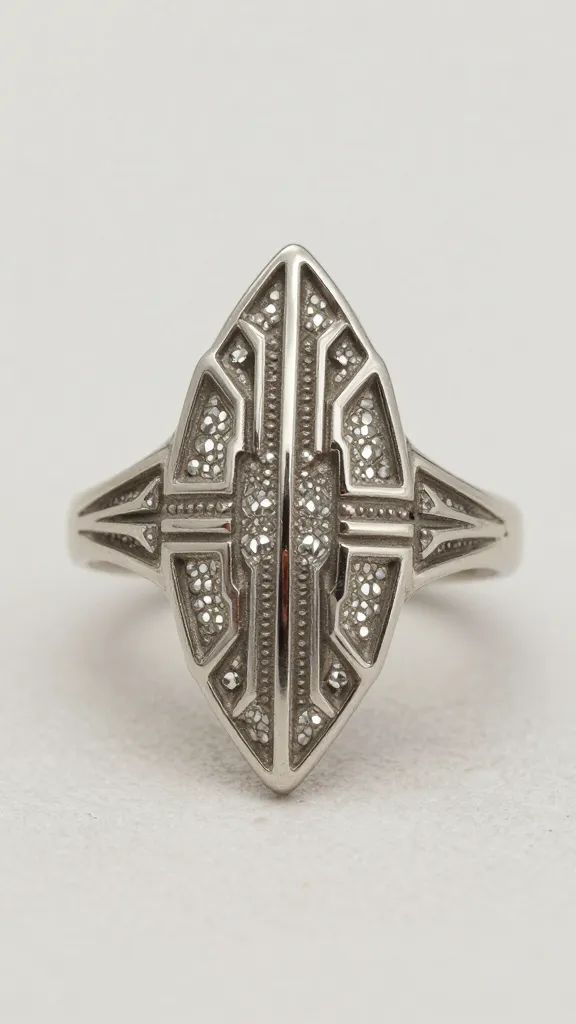
You’ve got options. Real-deal vintage, vintage-inspired, or fully custom. Which route wins? Depends on your priorities.
Authentic vintage
- Pros: Actual 1920s craftsmanship, unique designs, serious charm.
- Cons: Sizing limits, wear and tear, and sometimes old repairs or replaced stones.
Vintage-inspired (newly made)
- Pros: Fresh materials, modern durability, full control over size/stone/metal.
- Cons: Less historical romance, and quality varies—choose a reputable maker.
Custom build
- Pros: You call the shots—perfect proportions, ideal finger coverage, all the Deco details.
- Cons: Longer timeline, more decisions (analysis paralysis is real), and usually higher cost.
How to Get the Proportions Right
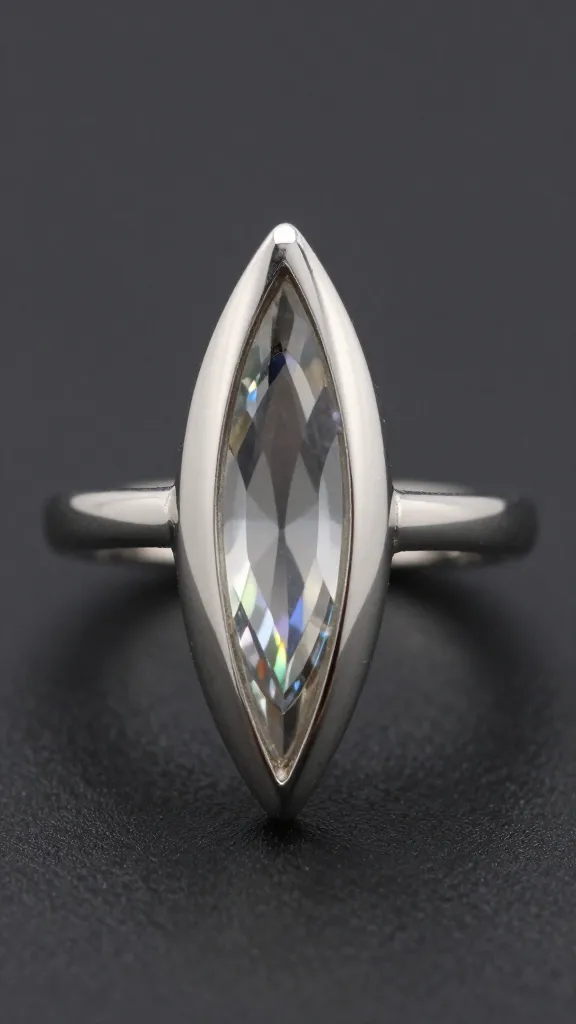
Marquise rings can look elegant or… a bit dagger-esque. Nailing the scale matters.
- Length-to-width ratio: Sweet spot often sits around 1.9–2.1 for a balanced look.
- Finger coverage: Aim for presence without overhang. If the points extend past your finger’s width, size down or consider a halo.
- Protect the points: V-prongs or capped tips help prevent chips. Non-negotiable, IMO.
- Band width: Pair a slim band (1.6–2 mm) with bold detailing to keep the focus on the center.
Halo or No Halo?
– Halo: Adds sparkle, boosts visual size, and protects the points. Very Deco with geometric frames.
– No halo: Sleeker, cleaner, and ultra-classic. Let the marquise do the talking.
Caring for Your Deco Darling
Vintage-style details look incredible, but they need a little TLC.
- Regular cleaning: Soft brush + mild soap + warm water. Rinse well. Dry with a lint-free cloth.
- Mind the filigree: Dirt hides in openwork. Gentle is the keyword.
- Routine checkups: Every 6–12 months, have a jeweler check prongs, especially those V-tips.
- Remove for heavy lifting: Gym, gardening, and power tools don’t vibe with delicate milgrain. Shocking, I know.
Stacking and Bands That Play Nice
– Slim pavé bands: Keep the focus on the center stone while adding shimmer.
– Contour bands: Hug the marquise shape and avoid awkward gaps.
– Colored gemstone bands: Sapphires or black diamonds echo Deco contrast without stealing the show.
FAQs
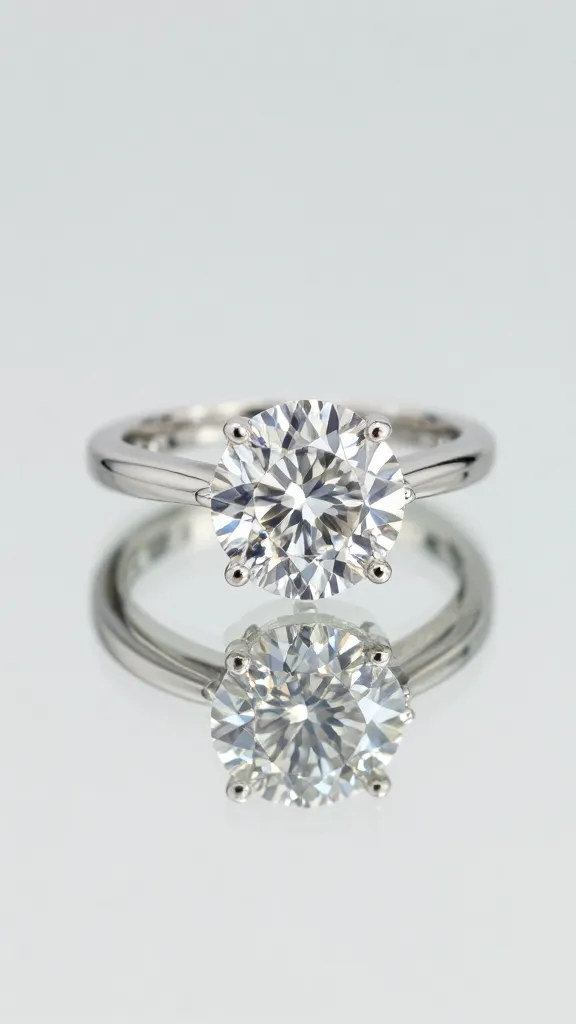
Do marquise diamonds look bigger than other shapes?
Yes—marquise cuts deliver tons of face-up spread for the carat weight. That elongated shape maximizes finger coverage and gives you major presence without jumping up a carat size. Budget win.
Are marquise rings durable enough for daily wear?
Absolutely, if you protect the tips. Choose strong V-prongs or caps, and keep the setting low-to-medium profile. Regular checkups keep everything tight and secure, FYI.
What color and clarity should I aim for?
For diamonds, G–H color and VS2–SI1 clarity usually look great and feel wallet-friendly. The shape can show inclusions near the points, so ask your jeweler to position prongs strategically. Eye-clean beats paper-clean, IMO.
Can I get a true vintage ring resized?
Often, yes—just not infinitely. Intricate filigree or full-eternity details can limit sizing. Work with a vintage-experienced jeweler who respects the original craftsmanship.
How do I avoid the bow-tie shadow?
View the stone in different lights and angles before buying. Look for a balanced cut and lively sparkle across the center. A slight bow-tie is normal; a big dark stripe is a no from me.
Is platinum worth the premium?
If you want crisp milgrain and long-term durability, platinum earns its keep. It doesn’t lose metal when it wears; it displaces. White gold is still great—just expect periodic rhodium plating to keep it bright.
Final Thoughts
A vintage marquise wedding ring with Art Deco flair doesn’t just sit pretty—it tells a story. You get sharp geometry, luxe textures, and a whole lot of personality packed into one sleek silhouette. Whether you score an authentic antique or craft a new heirloom, lean into the details: milgrain, geometric halos, contrasting stones. Do that, and your ring won’t just nod to the Jazz Age—it’ll dance right through it.