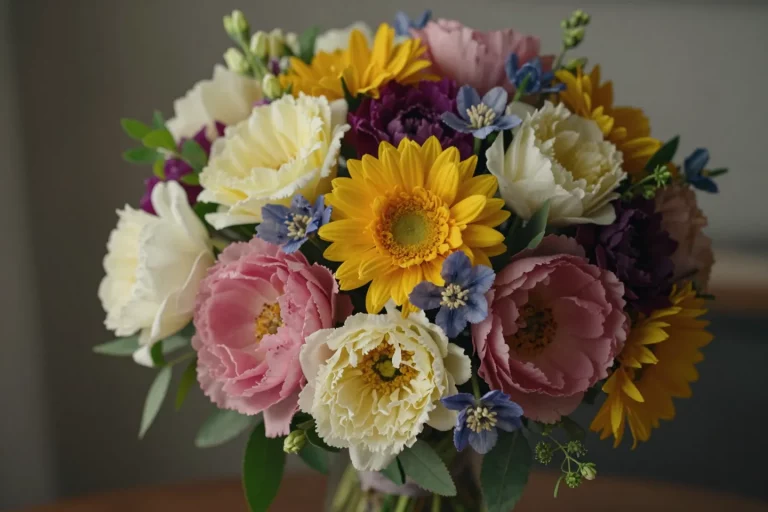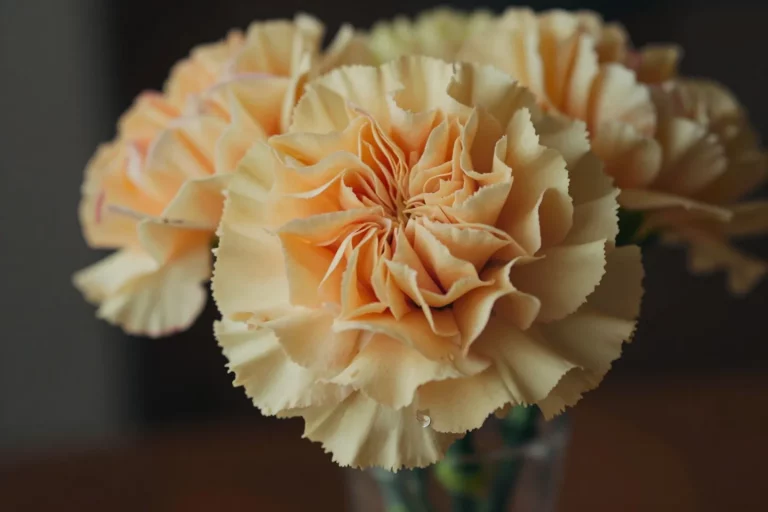
Let’s skip the fluff: you want a bouquet that looks like it walked off a Pinterest board. You’ll get there faster than you think. We’re talking color magic, shape secrets, flower chemistry, and some sneaky pro tricks. Ready to design a bouquet that makes people ask, “Who’s your florist?” Spoiler: it’s you.
1. Dream Up The Vision: Define Mood, Color, And Story
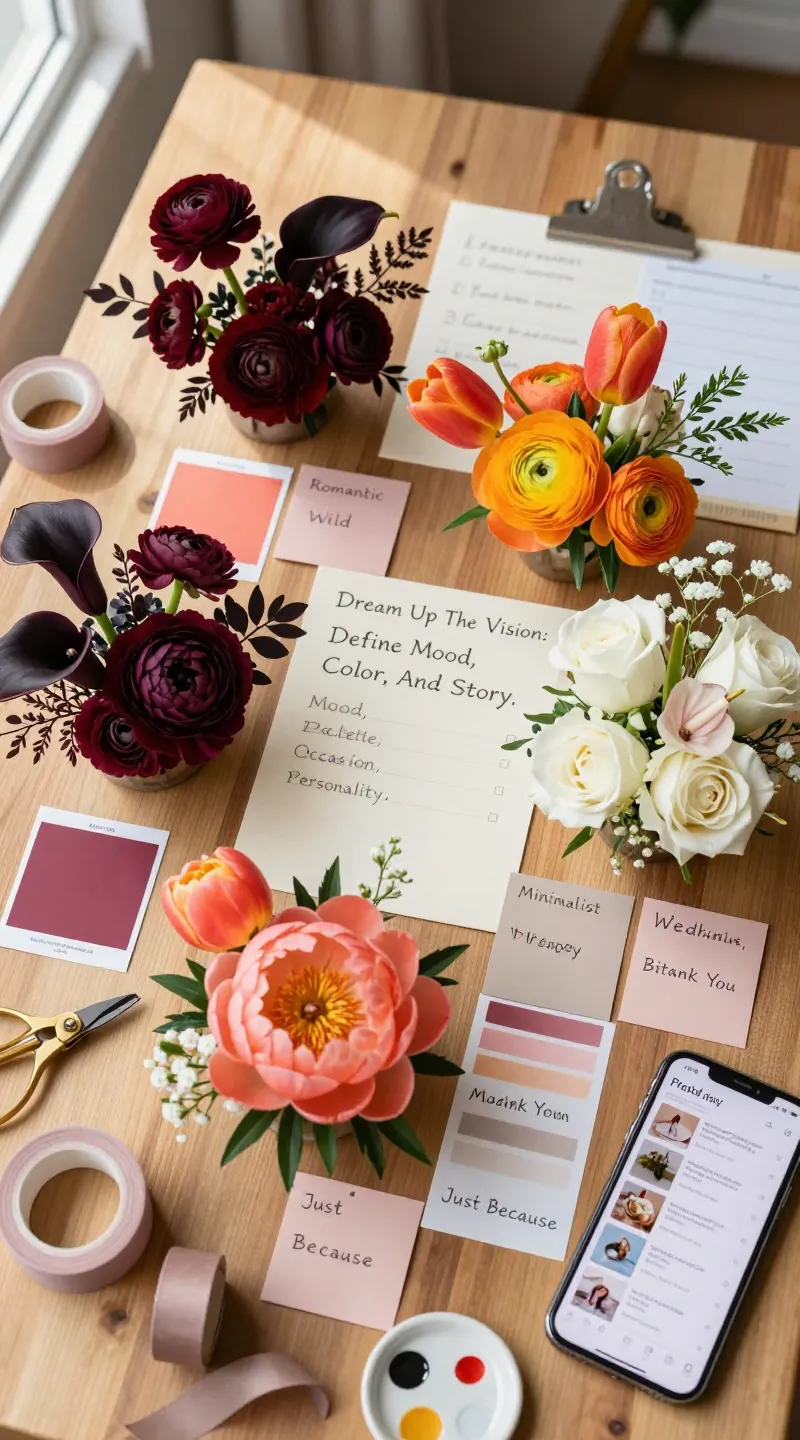
Every showstopper bouquet starts with a clear vibe. Do you want moody and dramatic, or bright and bubbly? Pin down the story first, then every stem has a purpose.
Key Questions To Nail Your Concept
- Mood: Romantic, wild, minimalist, or modern glam?
- Palette: Monochrome elegance, soft pastels, or bold contrast?
- Occasion: Wedding, birthday, thank-you, or “because I deserve pretty things”?
- Personality: Soft and airy or structured and chic?
Pick 1-2 hero colors, 1 secondary color, and 1 neutral. That gives you cohesion without chaos.
Palette Combos That Never Miss
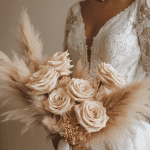
- Romantic Neutral: Blush, ivory, champagne, soft sage
- Vibrant Joy: Coral, hot pink, tangerine, pops of lime foliage
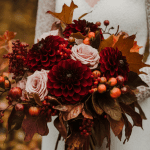
- Modern Moody: Burgundy, plum, mauve, deep green
- Fresh Garden: Lavender, butter yellow, white, silvery eucalyptus
Define the vibe and colors now, and you’ll avoid the “random grocery store bunch” look later. This step sets the tone and saves money because you’ll buy smarter.
2. Build Your Flower Cast: Focal, Supporting, Filler, And Foliage
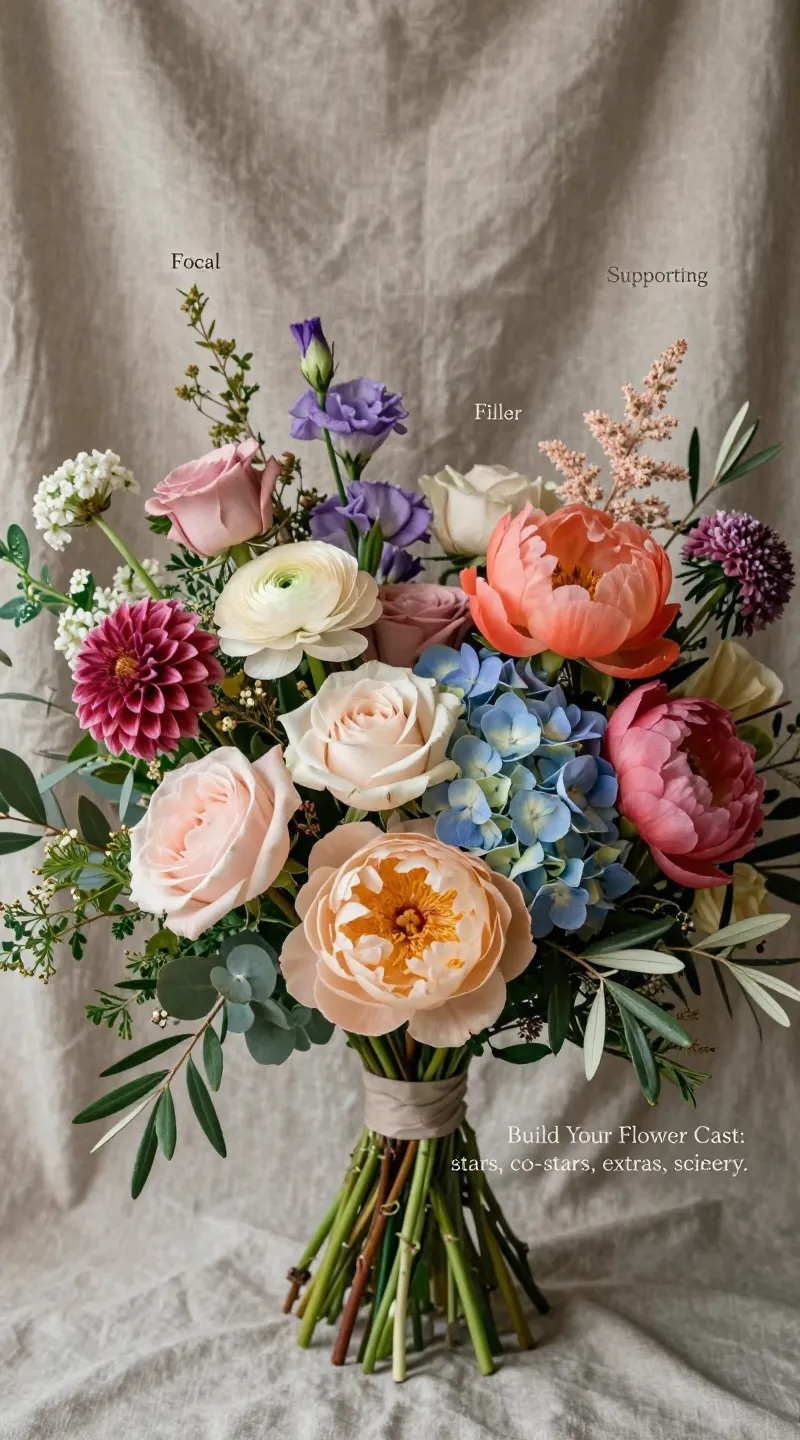
Think of your bouquet like a movie: stars, co-stars, extras, and scenery. The mix makes the magic. Variety in size, shape, and texture gives professional depth.
The Four-Part Formula
- Focal Flowers (The Divas): Big blooms that draw the eye.
- Roses, peonies, dahlias, hydrangeas, garden roses
- Supporting Flowers (The Best Friends): Medium blooms that bridge colors.
- Ranunculus, lisianthus, spray roses, scabiosa
- Textural/Filler (The Scene Setters): Add air, volume, and whimsy.
- Waxflower, astilbe, limonium, statice, rice flower
- Foliage (The Green Room): Shape, structure, and negative space.
- Eucalyptus, ruscus, salal, olive, fern
Pro Tips
- Use 1-2 focal varieties, 2 supporting, 1-2 filler, and 1-2 foliages.
- Choose contrasting textures: ruffly roses + feathery astilbe + smooth eucalyptus = chef’s kiss.
- Mind seasonality: peonies are spring; dahlias are late summer–fall; tulips are winter–spring.
With the right cast, your bouquet looks curated, not chaotic. This framework works for every style and season, FYI.
3. Shape It Like A Sculptor: Composition, Balance, And Flow
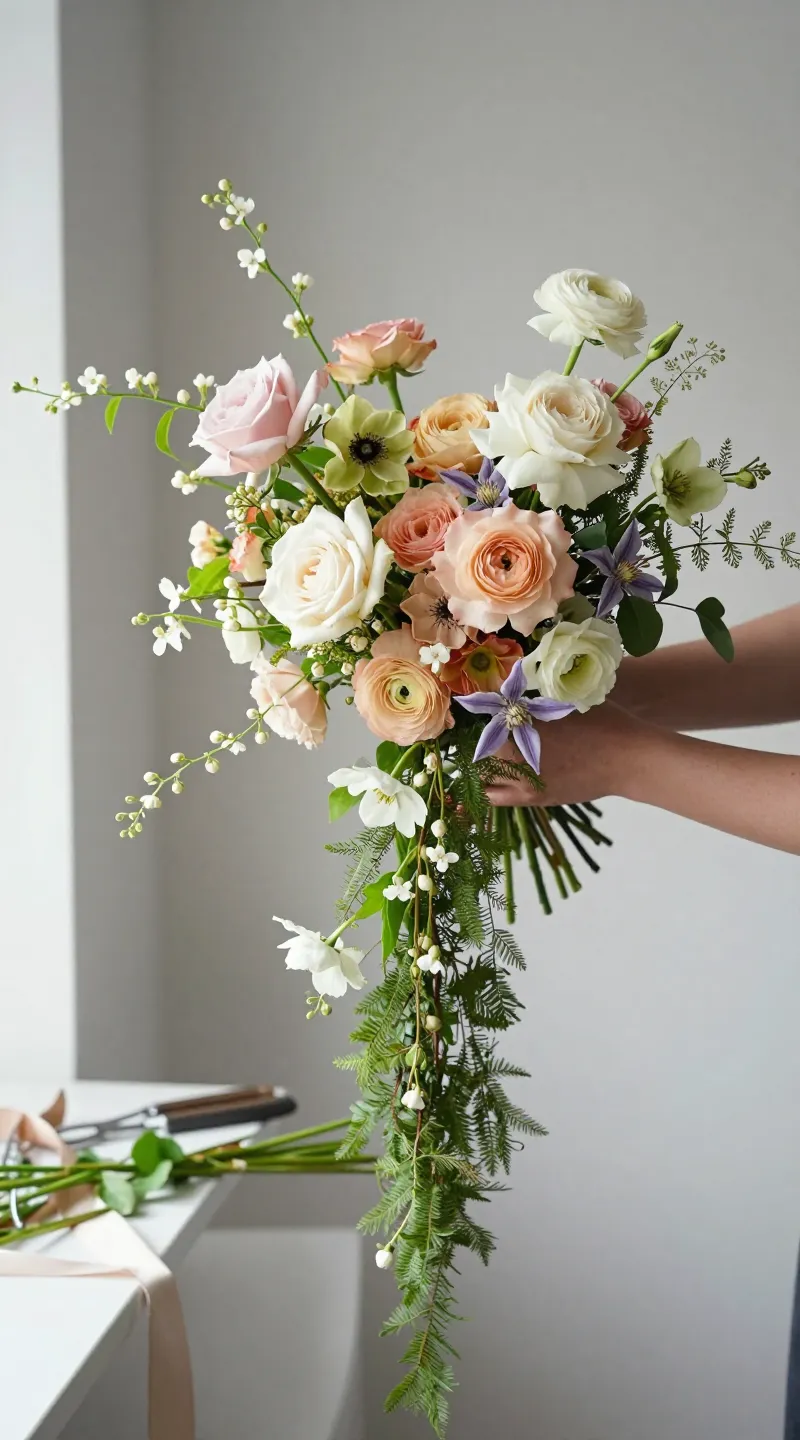
Shape turns a pile of flowers into a wow moment. You want movement and balance, not a stiff bowling ball. Aim for a loose silhouette with “air pockets” and lines that guide the eye.
Choose Your Silhouette
- Round And Lush: Classic bridal, even fullness, gentle dome.
- Asymmetrical Garden: Modern and romantic, with longer stems on one side.
- Crescent: Elegant swoop, great for editorial vibes.
- Hand-Tied Cascade: Waterfall effect using trailing greens and drapey blooms.
How To Build The Form
- Start With Foliage: Create the outline and negative space first. Think of it as your wireframe.
- Add Line Flowers: Use delphinium, snapdragon, or veronica to set the direction and flow.
- Place Focals Next: Stagger heights and avoid clustering all divas together.
- Layer Supporting Blooms: Bridge gaps and soften transitions.
- Finish With Texture: Tuck airy filler to add movement and breathe life into the edges.
Balance Without Boring
- Use the triangle rule: place focal flowers in a loose triangle for visual stability.
- Odd numbers please the eye: 3, 5, 7 focal blooms feel natural.
- Leave negative space: it makes the stars shine brighter.
Dial in the shape and your bouquet reads expensive instantly. This step separates hobbyist from “who hired the stylist?”
4. Color And Texture Wizardry: Contrast, Harmony, And Bloom Chemistry
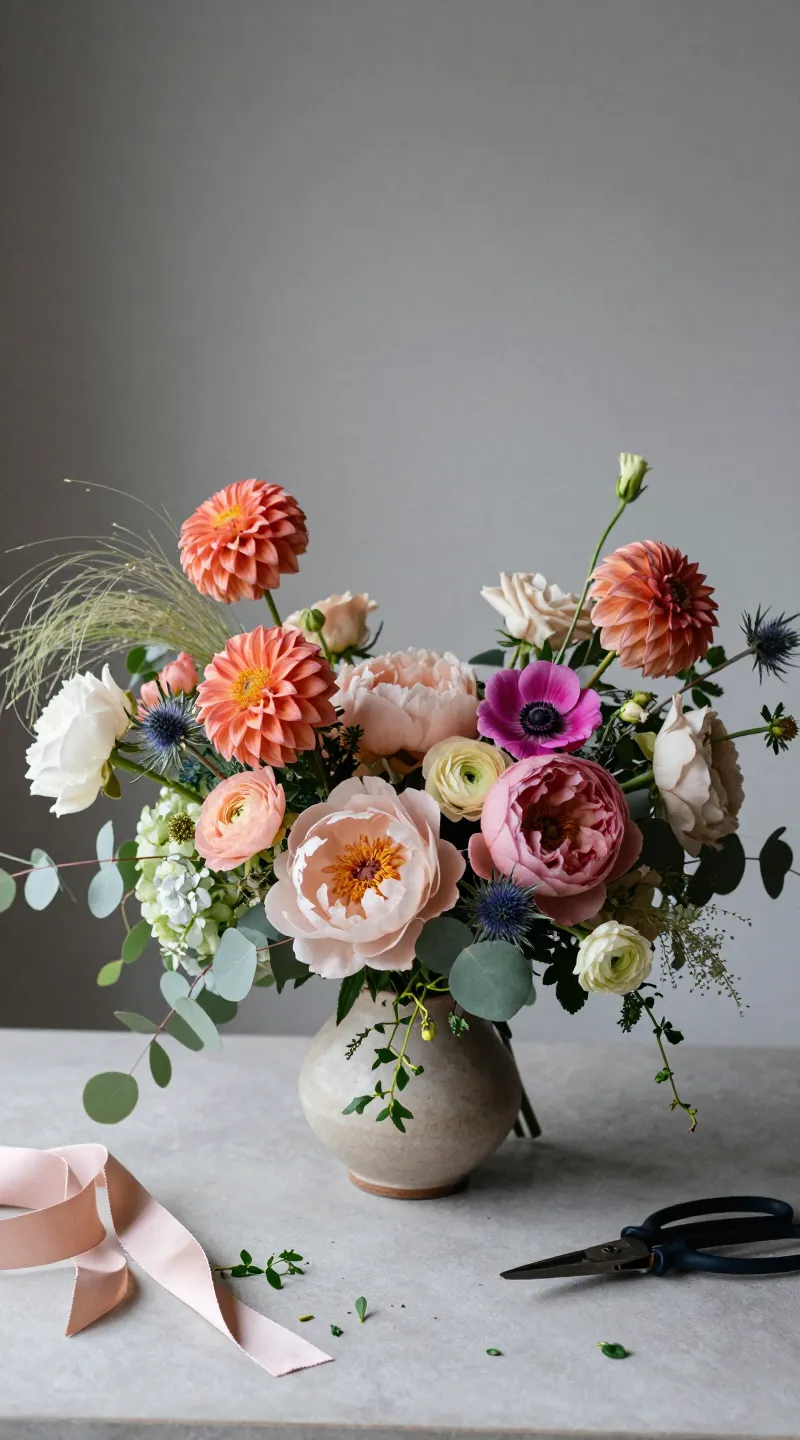
Color can make or break the bouquet. You want harmony with just enough contrast to spark excitement. Texture adds personality and helps your palette sing.
Color Tricks That Always Work
- Same Color, Different Shades: Blush + nude + dusty rose feels luxe.
- Neighbor Hues: Coral + peach + tangerine = juicy and cohesive.
- One Pop: Neutral bouquet with a single bold accent feels editorial.
- Temperature Play: Warm florals + cool greens create depth.
Texture And Shape Mix
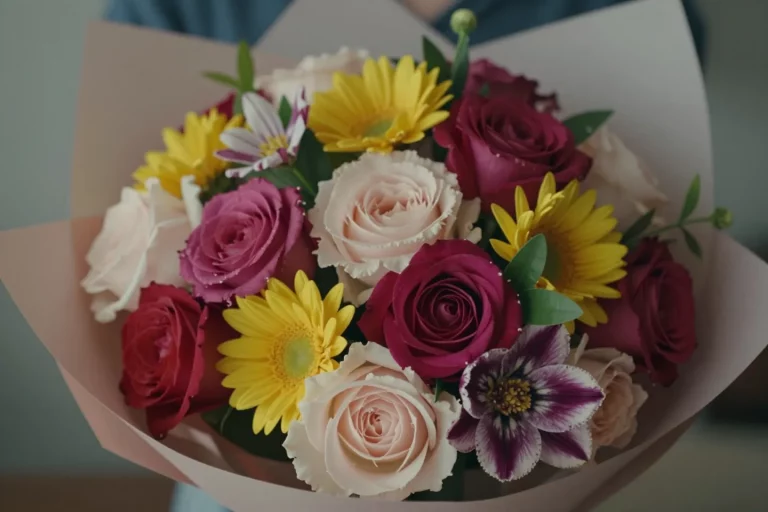
- Ruffles + Spikes + Clouds: Garden roses (ruffle) + veronica (spike) + hydrangea (cloud) = dimension.
- Big + Small: Pair large focals with tiny filler to avoid the “one-note” look.
- Shiny + Matte Greens: Glossy ruscus pops against velvety dusty miller.
Bloom Chemistry 101
- Fragile friends: Anemones and poppies bruise easily—add them last.
- Water hogs: Hydrangeas need constant hydration—spritz stems and petals.
- Ethylene sensitive: Avoid storing flowers near fruit. Bananas are bouquet villains, seriously.
When you balance color and texture with intention, your bouquet feels cohesive and custom. It’ll photograph beautifully and look stunning IRL.
5. Prep, Assemble, And Finish Like A Pro
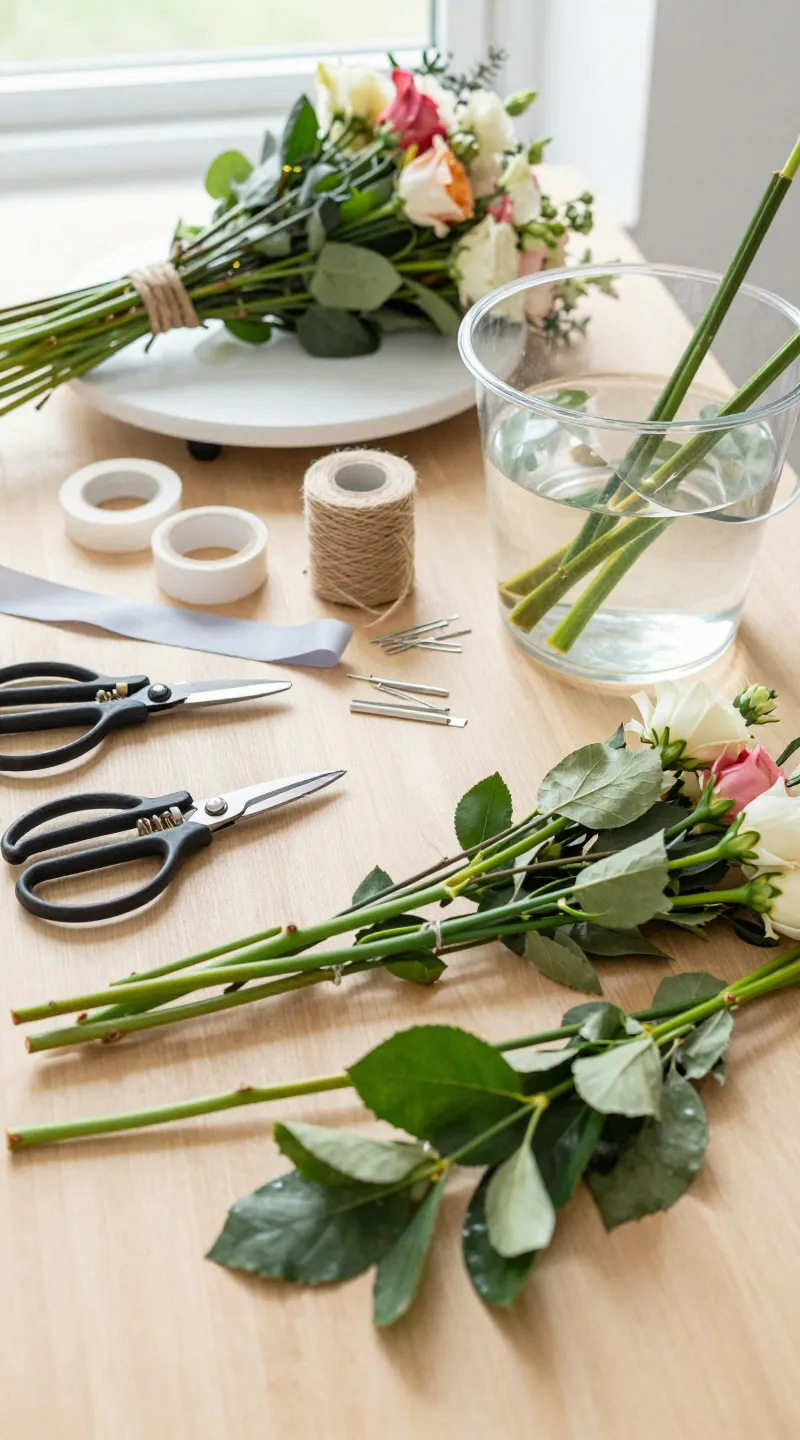
The secret sauce? Preparation and clean mechanics. Great flowers die fast without proper care, and sloppy stems ruin the line. Treat this like a mini craft project—and yes, the details matter.
Materials Checklist
- Sharp floral shears or pruners
- Floral tape and twine
- Ribbon or silk for finishing
- Clean bucket, flower food, and fresh water
- Optional: floral wire, pins, and a lazy Susan turntable
Hydration And Conditioning
- Unwrap immediately and remove lower leaves that sit below the waterline.
- Cut stems at an angle under water for maximum uptake.
- Let flowers drink for 2–6 hours in a cool room. Overnight is ideal.
- Revive droopy blooms: boiling-water dip for woody stems (30 seconds), then back to cold water.
Hand-Tie Technique (The Spiral)
- Hold your first stem at a slight angle. Add each new stem crossing diagonally in the same direction to form a spiral.
- Rotate the bouquet in your hand after each 2–3 stems to keep symmetry and flow.
- Check the silhouette in a mirror. Adjust heights for a natural, airy look.
- Tie off with twine at the pinch point. Trim stems evenly.
Finishing Touches
- Ribbon wrap: Cover twine neatly; pin through the ribbon into ribbon only, not the stems.
- Edge finesse: Add airy bits (like waxflower or jasmine) around the rim for movement.
- Transport smart: Keep stems in water until the last minute. Use a vase or bouquet box.
Care And Longevity
- Refresh water daily and recut stems every other day.
- Keep away from heat, direct sun, and fruit bowls. Yes, looking at you again, bananas.
- Swap delicate blooms midweek if needed to extend the overall life.
Strong mechanics and good care make your bouquet last longer and look polished. The result feels luxe and intentional, IMO.
Ready to go from Pinterest scroller to bouquet boss? Start with a clear vibe, pick the right cast, sculpt a flattering shape, and finish with pro-level care. You’ll design arrangements that turn heads—and maybe spark a few “Can you make one for me?” texts. Trust me, you’ve got this.