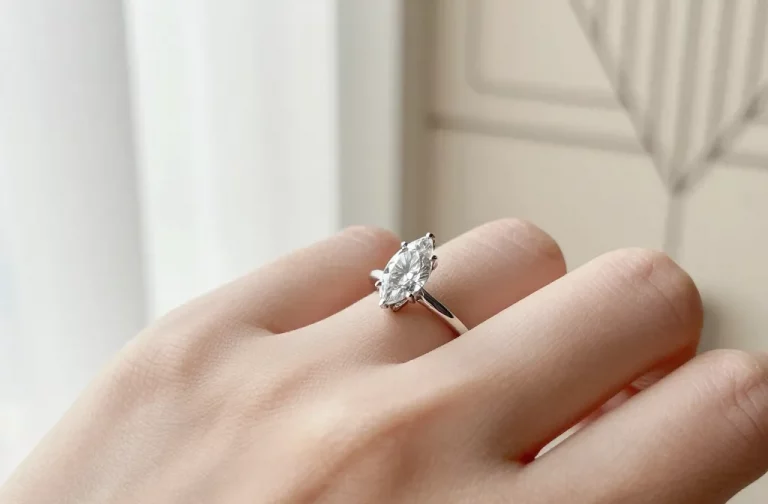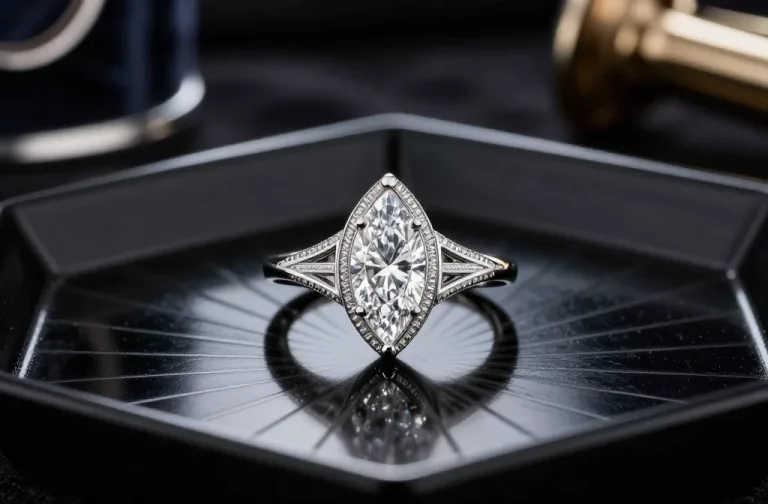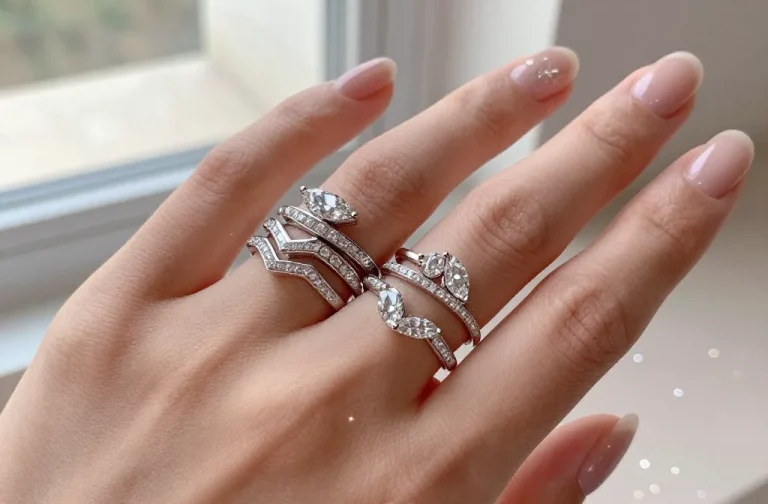
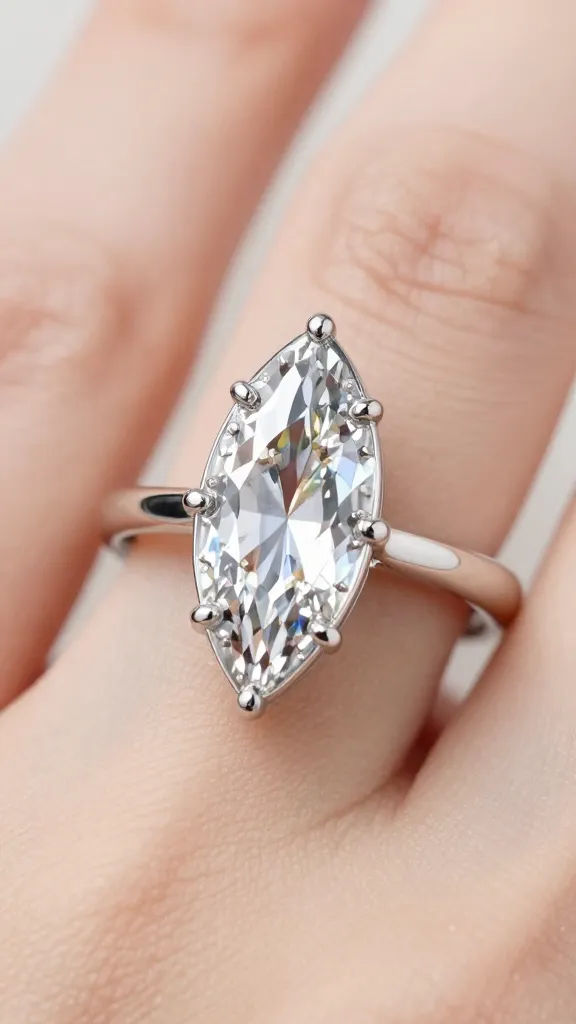
You’ve got a stunning marquise engagement ring—aka the diamond that looks like it belongs on a renaissance queen. Now you want a stack that turns heads on Pinterest and in real life. Good. Because the right wedding bands don’t just “go with” a marquise—they frame it, amplify it, and make the whole set look intentional and artful. Let’s build a stack that slaps (tastefully).
Start With the Star: Know Your Marquise
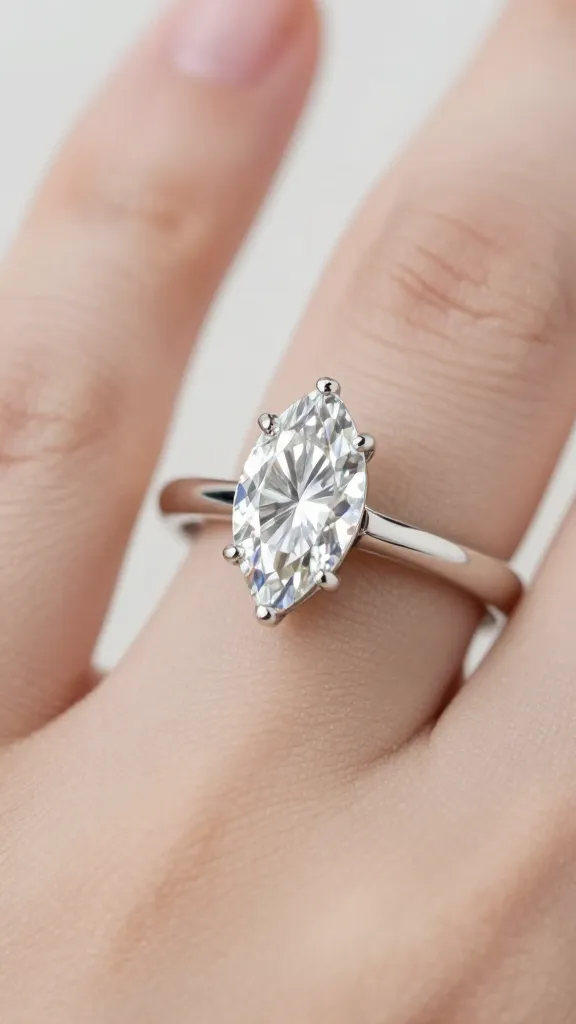
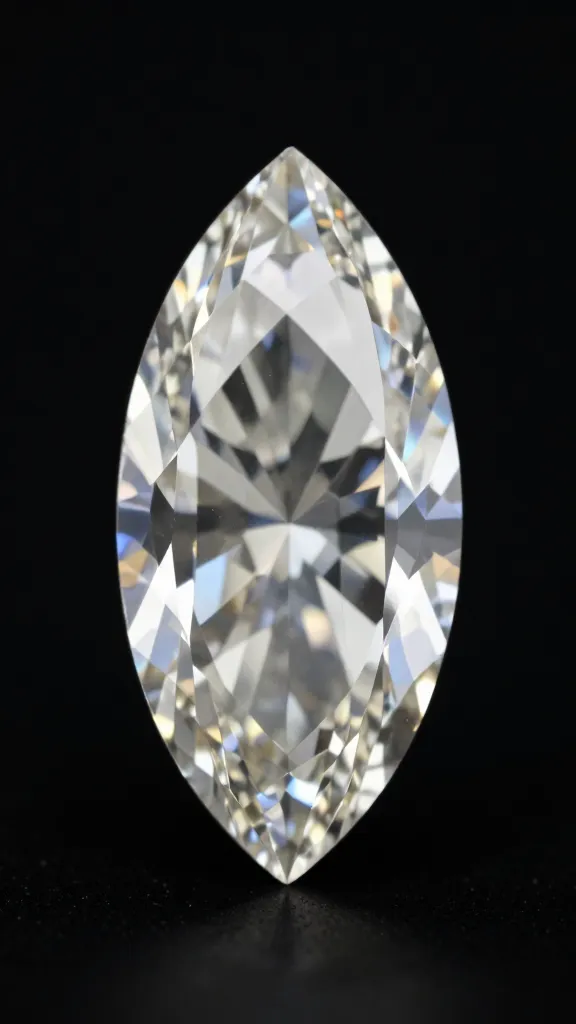
Before stacking, you need to read your center stone like a stylist reads your vibe. The marquise shape stretches finger real estate and loves symmetry. But it has quirks.
- Length-to-width ratio: Most marquises hit sweet spots between 1.8–2.1. Longer stones look elegant and dramatic; shorter ones lean bold and vintage.
- Orientation: North-south (classic) or east-west (cool girl energy)? Your band choices change based on this.
- Setting height: A high-set stone fits curved bands easier. A low-set ring plays nicer with ultra-thin or contoured bands.
- Tips and prongs: V-tips protect the points but can block bands that sit too close. Note where the metal hugs the stone.
Pro move: Try a ring sizer stack
Ask your jeweler for a few band testers (or stack your own dainty rings) to see where gaps appear. You’ll learn fast if you need a contour, chevron, or straight band.
Choose Your Stack Strategy
You’ve got options. Let’s narrow them down so your stack looks curated, not chaotic.
- The Contour Queen: Pair the marquise with a curved band that nestles the belly of the stone. It hugs the shape and photographs like a dream.
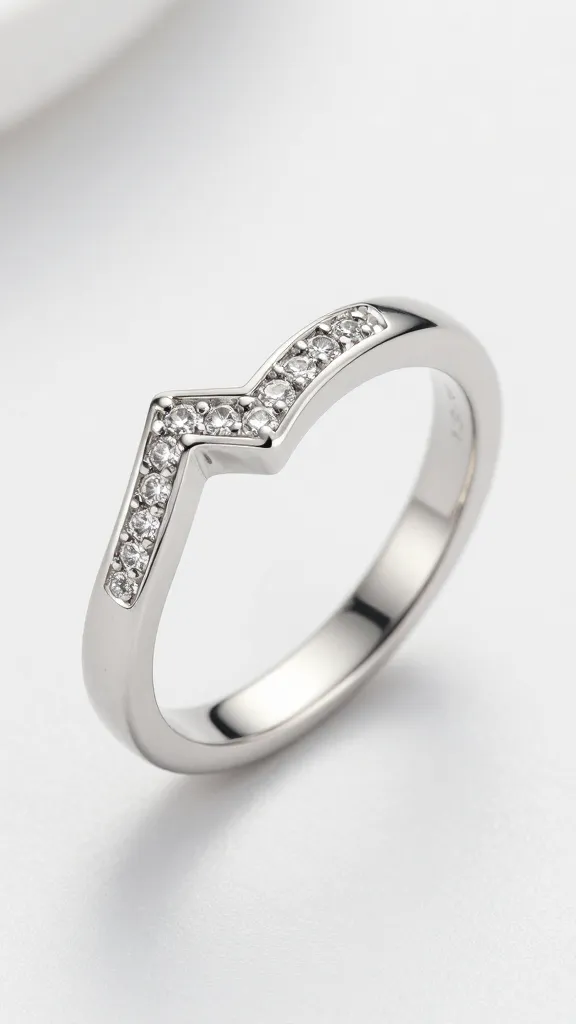
- The Chevron Power Move: A V-shaped band mirrors the points for high-drama symmetry. One above or below looks sleek; two create a crown effect.
- The Negative Space Muse: Use a slender straight band and intentionally leave a gap. It gives that modern, editorial look.
- The Symmetry Stack: Place matching bands above and below for balance. Think twin pavé curves framing the marquise.
IMO: Chevron + Marquise = chef’s kiss
A soft V band that lines up with the tips looks custom and architectural without trying too hard.
Mix Metals and Textures Like a Stylist
A Pinterest-worthy stack needs dimension. Translation: don’t be afraid to mix things up.
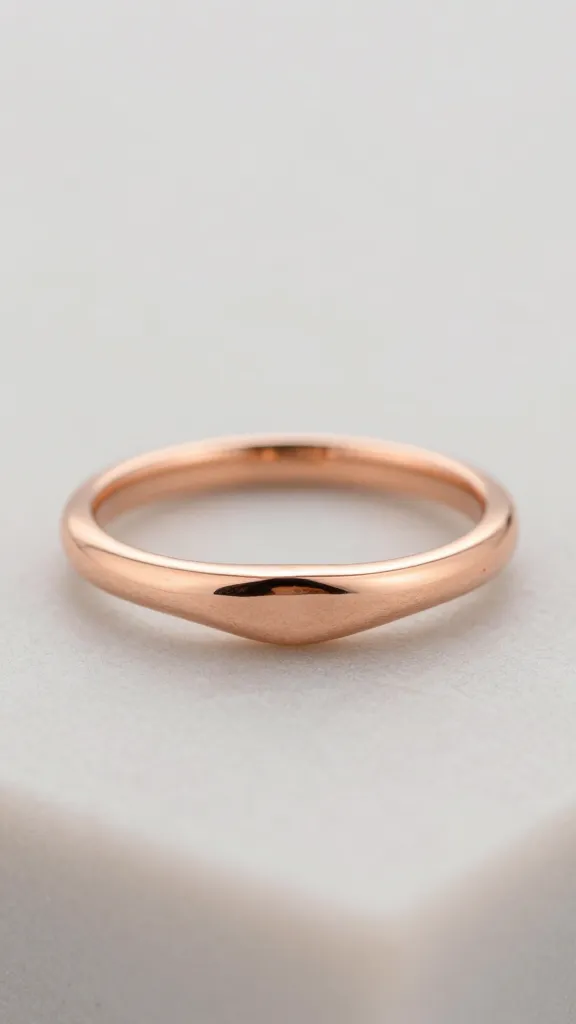
- Metal combos that pop: Yellow gold + platinum; rose gold + white gold; all-yellow (classic and warm). FYI, mixing metals looks intentional if you repeat each tone at least once.
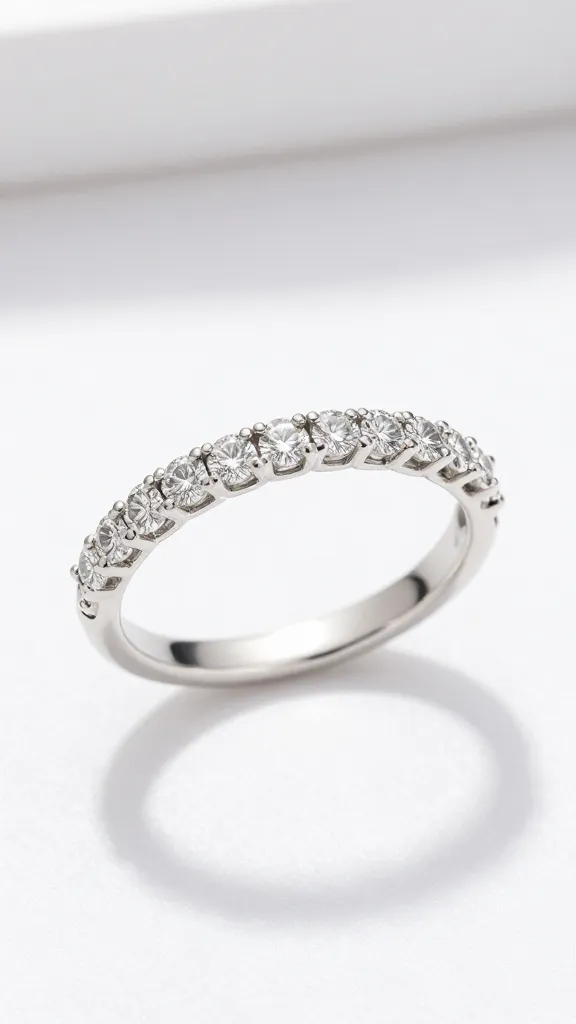
- Textures to layer: Pavé for sparkle, milgrain for vintage charm, knife-edge for sculptural lines, and a satin band to break up all the bling.
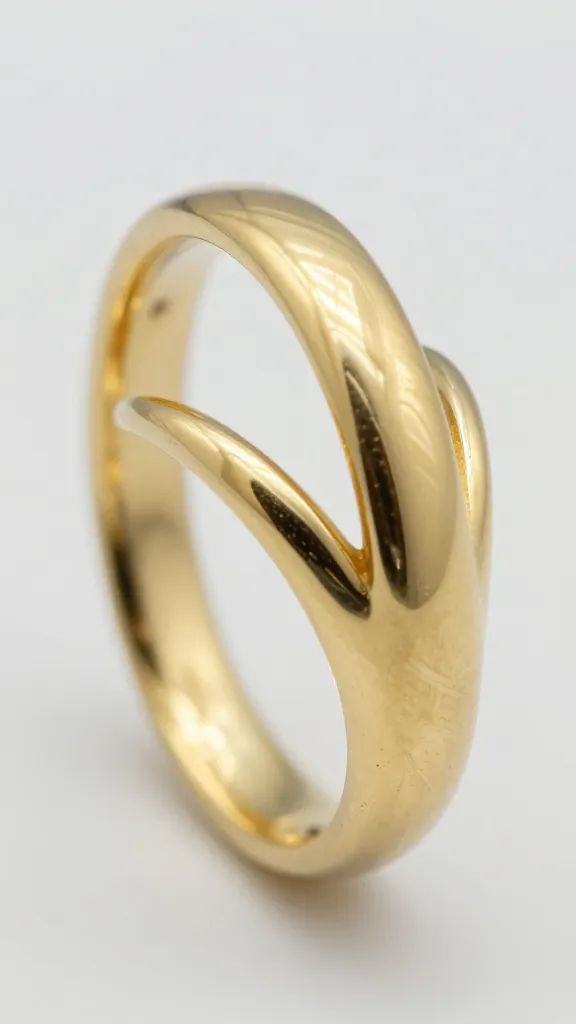
- Widths that work: Keep bands in the 1.3–2.0 mm range for a delicate stack, or anchor with a single 2.5–3 mm piece if your marquise is large.
Balance the sparkle
If your marquise has a halo or lots of pave, go lighter on the bands. If it’s solitaire and clean, bring in texture and gems to do the heavy lifting.
Perfect the Fit: Curves, Gaps, and Geometry
Fit makes or breaks a stack. You want everything to look tailored, not like a crowded subway at rush hour.
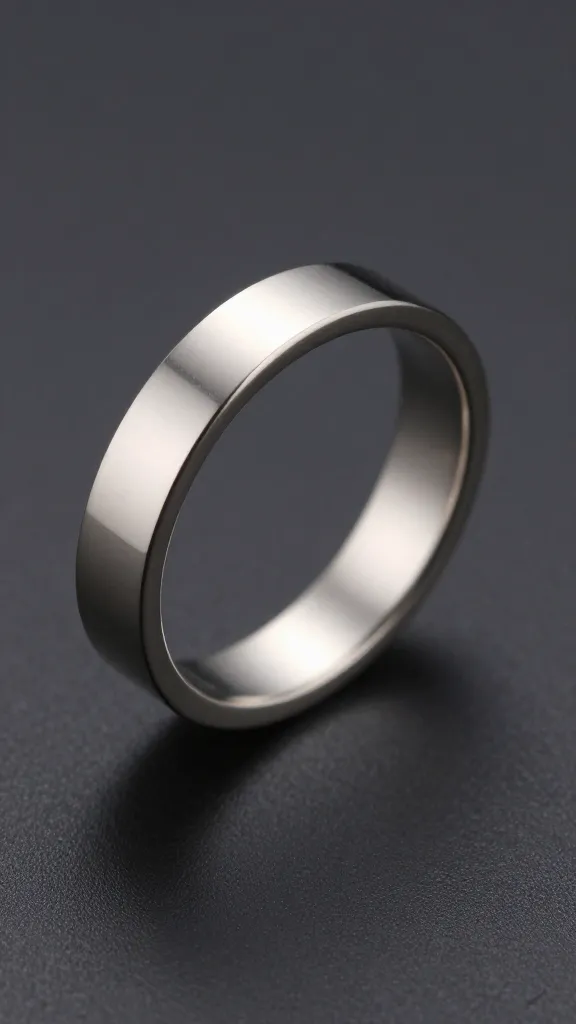
- Start with a base band: A thin, straight band sets the “floor” of your stack and keeps things grounded.
- Add a contour or V: Place it closest to the engagement ring so it follows the marquise silhouette.
- Decide on symmetry: Mirror the look above the engagement ring or keep the drama on one side only. Both work—just choose on purpose.
- Check the air gap: A tiny negative space reads editorial. A large gap can look accidental unless you repeat it with a top band.
North-South vs. East-West
– North-south marquise: works best with soft curves, shallow chevrons, and thin straight bands.
– East-west marquise: embraces deeper V bands, geometric arcs, and structured crowns. It’s bolder, so lean into it.
Gem Pairings That Flatter a Marquise
Your marquise already elongates your finger. Choose accents that echo or contrast that shape in a smart way.
- Baguettes and tapers: Minimal, sharp, and very editorial. They echo the marquise’s lines without overpowering it.
- Round pavé: Softens the points and adds shimmer. Great for everyday sparkle.
- Marquise accents: Tiny marquise stones in the bands create a cohesive theme (yes please).
- Bezel-set diamonds: Add modern texture and protect the stones. Perfect if you’re tough on your jewelry.
Color moments, done right
– Sapphires or emeralds as accent stones? Gorgeous. Keep carat weight small so the center stays boss.
– Champagne or salt-and-pepper diamonds add moody, editorial vibes. Repeat the tone once for intention.
Scale, Stacking Order, and Everyday Wear
Let’s make this stack wearable, not just “photo shoot only.”
- Scale: If your marquise is 1.5 ct+, go thinner on bands so it stays the star. Under 1 ct? Add a bolder band for contrast.
- Order: Engagement ring centered, contour closest, straight or textured band next, statement band last. Above-and-below symmetry? Mirror that order.
- Comfort: Curved interiors (comfort fit) matter, especially with multiple bands. Your fingers will thank you.
- Durability: If you lift, cook, or type a lot, opt for lower profiles and bezel or channel details. Pavé can snag if it’s too exposed.
Stack recipes to steal
– Minimal Modern: Thin platinum base band + marquise solitaire + shallow V band with micro pavé.
– Vintage Romance: Yellow gold marquise with milgrain + curved band with marquise accents + slim engraved top band.
– Bold Symmetry: Halo marquise + twin soft-chevron bands above and below + brushed gold accent band.
Custom vs. Ready-Made: What’s Worth It?
Custom feels extra, but sometimes you need it for a perfect fit.
- Go custom when: Your marquise sits low, your prongs block standard bands, or you want a precise contour that locks in place.
- Buy ready-made when: You’re using straight bands, gentle curves, or classic chevrons. Plenty of gorgeous options exist (and they ship faster).
- Budget tip: Splurge on one custom “hugger” and fill the rest with off-the-shelf bands. You’ll get the look without going full wallet acrobatics.
FAQ
How do I prevent my marquise from spinning in a stack?
Size the engagement ring precisely and choose a contour band that cradles the stone. Add a second band on the other side for balance. If your rings still spin, ask your jeweler about sizing beads or a subtle euro shank—both add stability without changing the look.
Do I need matching metals for a cohesive stack?
Nope. Mixed metals look chic when you repeat each color at least once. For example, yellow gold engagement ring + platinum contour + yellow gold top band. It reads intentional, not random.
Can I stack with a very low-set marquise?
Yes, but go slimmer. Use a thin contour or custom notched band that sits flush. Straight bands might bump into the setting, so test them IRL before committing, IMO.
What band width works best with a marquise?
For most hands, 1.5–2.0 mm feels balanced and wearable. If your marquise is petite, a single 2.5–3 mm statement band can anchor it nicely. Try a few widths in-store to see what flatters your finger length.
Will pavé bands wear out faster in a stack?
They can if diamonds rub against other rings. Choose high-quality pavé with secure settings, rotate in a plain spacer band for protection, and remove your stack during heavy lifting or gym sessions. Treat sparkles kindly, and they’ll sparkle longer—wild concept, I know.
Is a chevron band too trendy for long-term wear?
Chevron bands have stuck around because they flatter so many center stones—especially marquise. If you want timeless, pick a softer V with subtle pavé or plain metal. It’ll age like a fine wine, FYI.
Conclusion
A marquise already brings drama; your stack should frame it, not fight it. Start with fit, layer in texture, and balance sparkle with negative space. Whether you go custom-contour or grab a ready-made chevron, build with intention and comfort in mind. Do that, and your ring selfies—and your daily wear—will both be absolute fire.